Menstrual & Hormonal Trouble Shooting
🧭 How to Use This Page
This blog is designed a bit differently. Instead of giving you big ideas and saving the "how" for a product pitch at the end, I like to walk you through the process step-by-step—with practical tools you can actually use. Think of it like a workbook in blog form: hands-on, reflective, and designed to support real insight.
You’ll find:
-
💡 Reflection prompts woven throughout, which you can sit with quietly or journal through—whatever suits your style
- 📝 Exercises to guide you through specific steps, practices, or processes
-
🛠️ Tools and worksheets to help you go deeper——some are free, some are paid
- 📄 Reference sheets for quick, printable overviews of key ideas that go beyond what’s covered in the blog
-
👣 Optional next steps at the end, if you'd like to work with me directly
You can dip in or dive deep. No need to “do it right”—the way you engage is the right way for right now. My goal is to make the ideas doable—not just understandable. (And if you’re overthinking that, hi. You’re among friends.)
A Brief Disclaimer...
It's worth saying: This is not my wheelhouse.
My expertise and experience is working with people on their love, life, and relationship dynamics.
However, it's frequently through working with me that folks realise they can seek a diagnosis, and I share these resources so often that it makes sense to have them all in the one place!
📖 Start Here: Why Ask About Hormones?
I work with folks who are experiencing challenges in their lives due to work, money, relationships... you name it, its fucking with them.
And it's true that those issues have a big impact on all our lives. I also frequently work with people who have unidentified and treatable shit that is magnifying their reactions, and contributing to mental, emotional, and physical issues.
So now I always check is whether fluctuations or cyclical hormonal changes in estrogen and progesterone are influencing that experience. To be explicit, I'm not saying you feel this way because: hormones. That's reductive and infantilising. Instead, I'm wondering whether there are factors that magnify your pain or suffering that could be resolved or reduced.
The aim of these resources is to help you:
-
Eliminate or identify hormonal fluctuations in estrogen and/or progesterone as causes of pain or suffering
-
Discover some common sets of symptoms that might lead you to recognise a treatable condition
-
Describe to your doctor why you think you might have one of these things.
This helps you move away from thinking your way out of emotional and physical distress, toward treating symptoms as hormonal or physiological where appropriate.
Perimenopause
Perimenopause describes the entire transitional stage of reproductive life between 'regular cycles' and the menopause. During this stage the levels of hormonal patterns (of estrogen, progesterone, FSH and luteinising hormone) fluctuate unpredictably. That unpredictable variation of hormones also produces different symptoms in different people. That can make the experience seem vague and nebulous... it could be cold, flu, or COVID, stress, ADHD, chronic illness, or just Wednesday. You know? It's different for everyone.
The average age for perimenopause diagnosis is 47, but perimenopause can start as young as between 30-45 years old, and can last between 1 and 10 years!
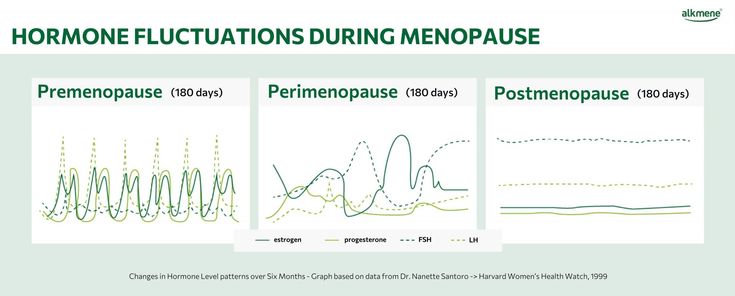
You can see in this graph the way that the more cyclical and predictable levels of hormones change during perimenopause.
While there are many symptoms of perimenopause, the ones that most often flag it as possible to me are below. That's not because they're the most common in general, but because they most reflect the kinds of reasons people work with me on their relationships or life.
The most common reasons I suggest for investigating perimenopause are;
- Folks describe feeling 'out of control' emotionally. That emotional dysregulation seems unusual to them, and perhaps out of proportion to what is happening in their life. It might be affecting their work, and they might be crying frequently and/or can't seem to stop crying. It could also be anger or rage from zero to one hundred in a second.
- Folks describe a change in libido or arousal that suggests physiological or hormonal causes (alongside others).
There's no definitive test for perimenopause. Diagnosis takes place in consultation with your doctor, who will ask you about the symptoms you are experiencing. It can be really helpful to have your own list of symptoms to share with them, I've listed a bunch of examples below.
So yeah. There's a bunch of ways that perimenopause can show up, and if you have a few of these symptoms it is definitely worth checking it out by doing some more reading and personal research, as well as consulting with your doctor.
Hormone replacement therapy doesn't just help alleviate the symptoms of perimenopause, it's also thought to have a protective effect against cognitive decline and long term physiological health.
Perimenopause Reading & Resources
- Australian Menopause Society Perimenopause Information Sheet.
- Australian Menopause Society Information Sheets (index)
- Dr Lisa Mosconi on the Rich Roll podcast on Menopause, hormone health, and alzheimers prevention.
- Dr Lisa Mosconi, The XX Brain, and The Menopause Brain
- Maisie Hill, Perimenopause Power: Navigating Your Hormones on the Journey to Menopause
- Maisie Hill, Period Power: Harness Your Hormones and Get Your Cycle Working For You
Premenstrual Dysphoric Disorder (PMDD)
This page is a work in progress and there's a few other hormonal fluctuation related things I'd like to include here, but for now I'm just going to drop some links until I find some time to write them up in a little more detail.
Here's some great resources:
A self screen tool:
https://www.iapmd.org/self-screen
and some evidence based treatments
https://www.iapmd.org/shop/p/free-iapmd-premenstrual-disorders-pmds-treatment-guidelines